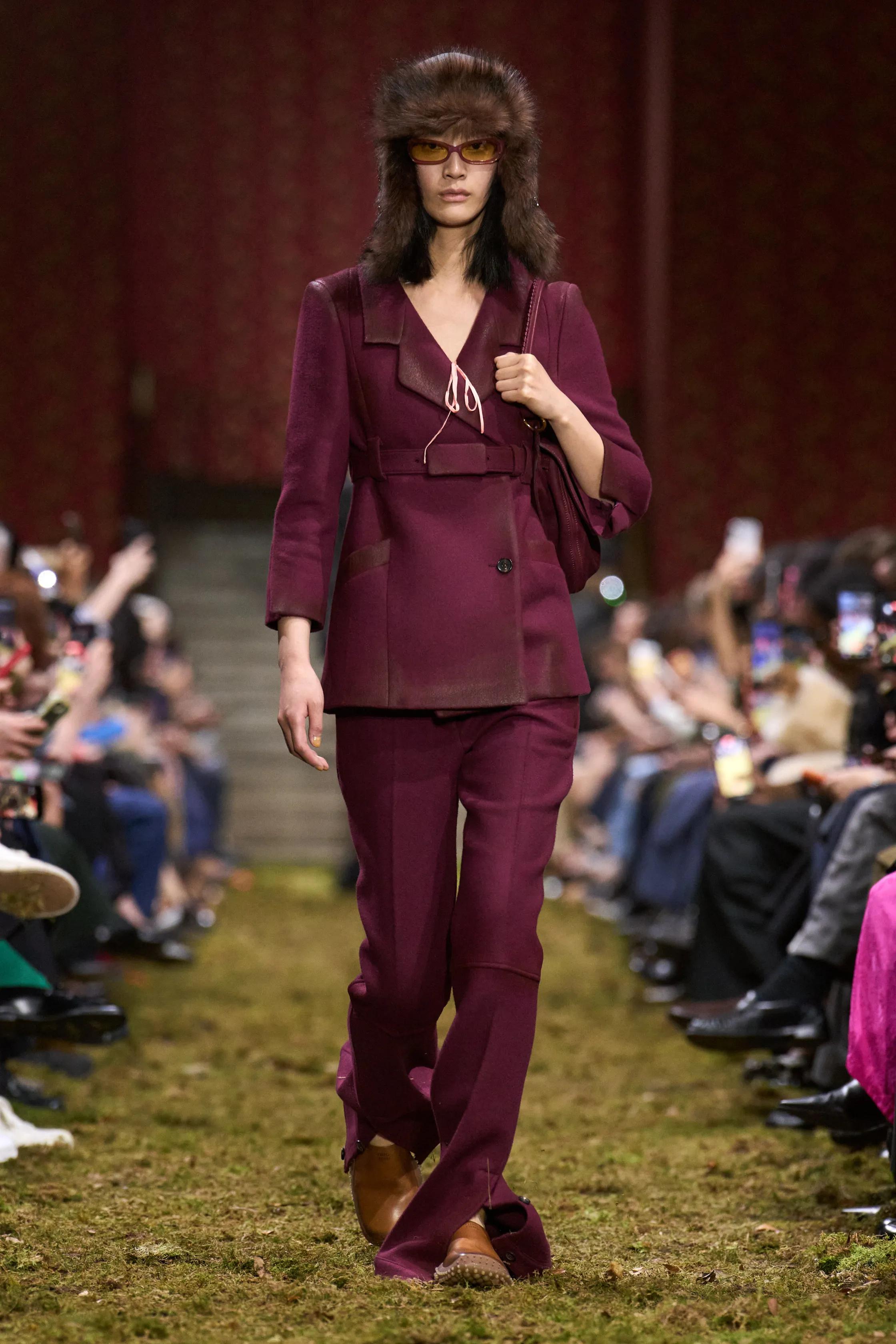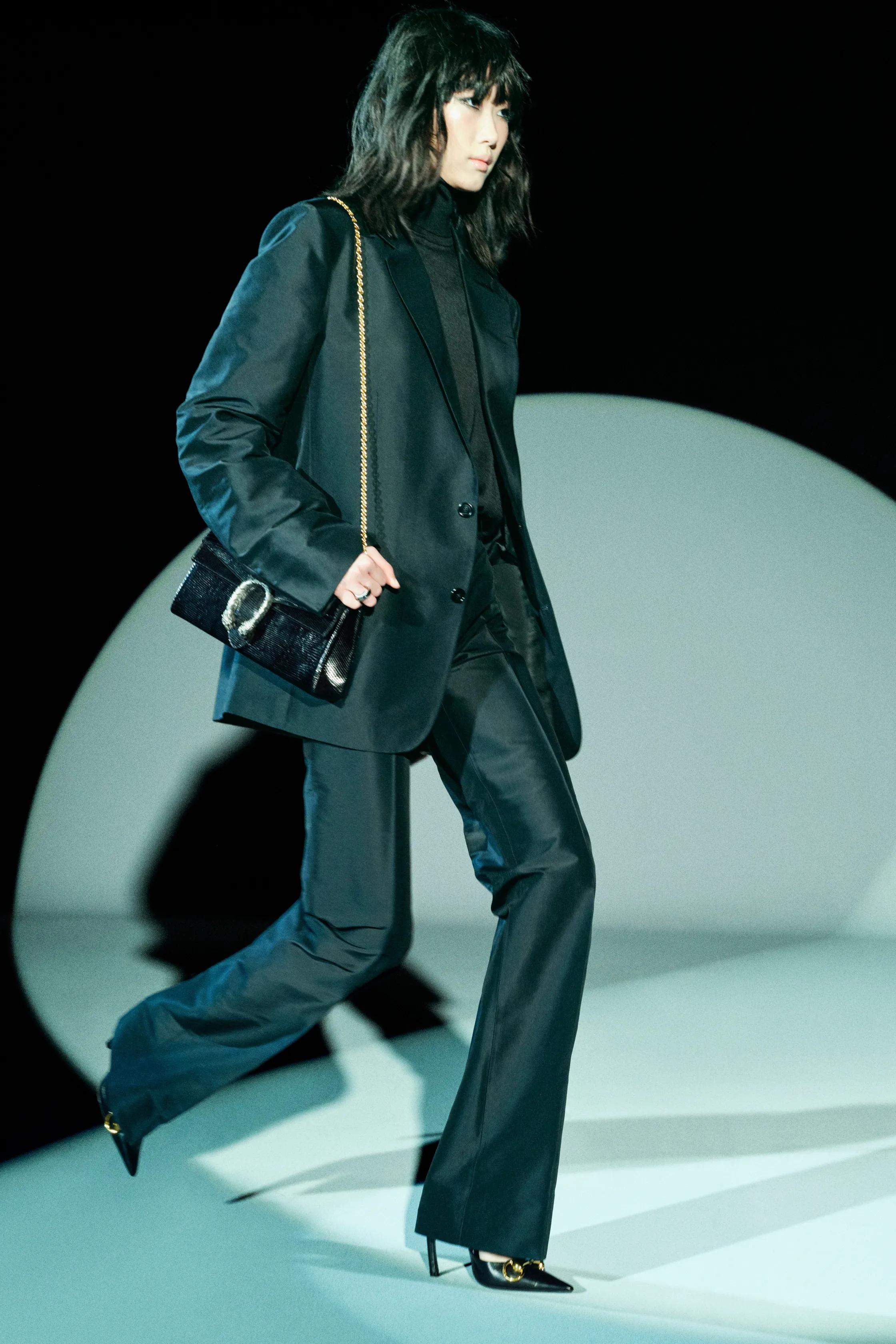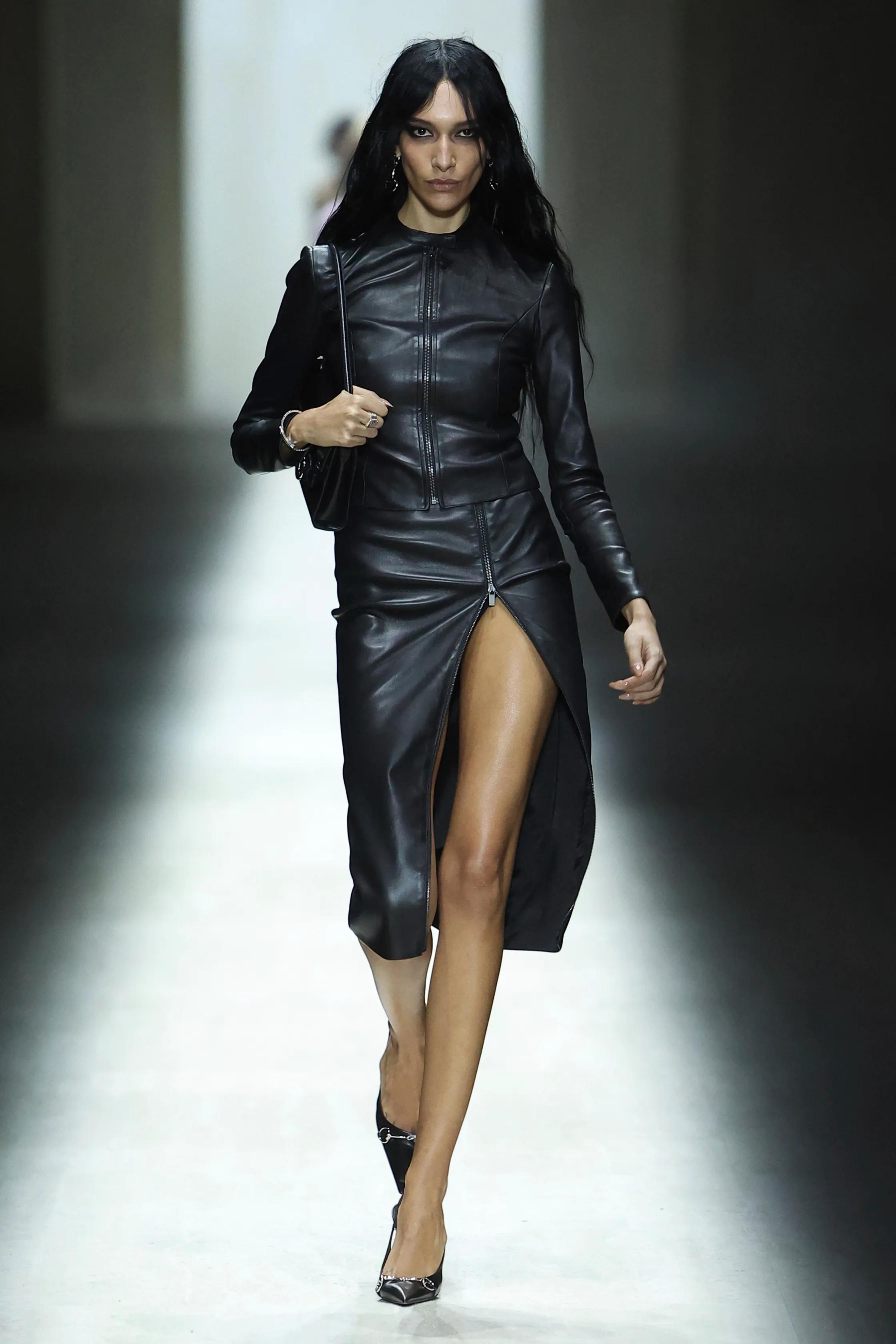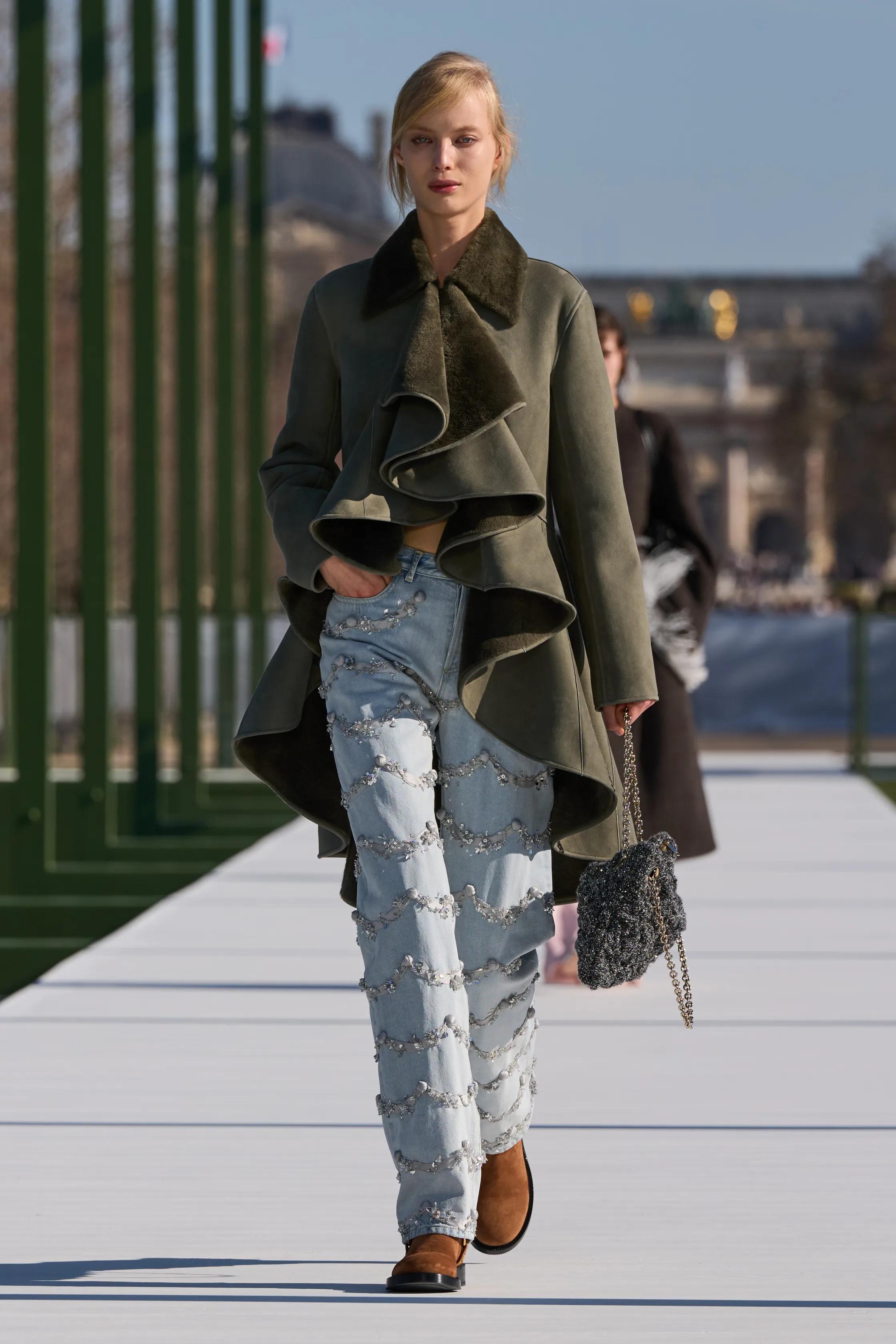
The thing about Jonathan Anderson is that he is genuinely one of the most interesting designers working right now. His JW Anderson shows redefined what British fashion could look like. His Loewe tenure was a masterclass in building a house identity from scratch, from the craft references to the puzzle bag to the way he made intellectualism feel covetable. His menswear work has a clarity of vision that is rare and consistent.
Which is exactly why his FW26 Dior womenswear show was such a strange thing to watch.
What the data actually says
Let's start here, because the numbers are more honest than the standing ovations. Our pytrends data from the week following the show puts Jonathan Anderson Dior at 5.6 current search interest with -4.6% velocity. Flat. For context, Matthieu Blazy's Chanel FW26, shown in the same season, scored 56.6 with +134.7% velocity. Miu Miu aesthetic sits at 85.1. Ballet flats at 83.4.
The bar jacket, positioned as the show's hero piece and the symbolic handshake between Anderson and the Dior archive, scored 14.6 in search with -70.4% velocity. That's not a slow burn. That's a signal that the consumer didn't follow.
A composite trend score of 87.4 sounds impressive until you see where it comes from. Strong runway presence, solid editorial coverage, and a social spike driven almost entirely by the celebrity reaction at the show rather than genuine consumer interest in the clothes.
The problem with the shoes
Here's where it gets specific. The styling felt unresolved in a way that Anderson's work almost never does. The footwear, the chunky almost orthopedic silhouette paired against the precision tailoring, read less like a deliberate subversion and more like a decision that hadn't been fully thought through. At Loewe, when Anderson does something uncomfortable with proportion or styling, you feel the intention behind it. At Dior FW26, the shoes just felt like an afterthought. And in a collection that was already asking you to believe in a new visual language for one of fashion's most loaded houses, that's a lot to overlook.
Styling is where vision becomes legible. It's the last conversation a designer has with the audience before the look leaves the runway. When it's unresolved, it makes you question whether the vision behind everything else is as solid as it appeared.
The menswear problem
Anderson's menswear record makes this more interesting, not less. His menswear shows at both JW Anderson and Loewe have a consistency that his Dior womenswear hasn't found yet. There's a point of view you can track across seasons: the relationship to craft, the proportional play, the way references are digested rather than quoted. His womenswear at Dior FW26 felt like it was still working out what it wanted to say.
That's not unusual for a first show. The problem is the discourse around it didn't allow for that reading. The internet decided it was genius before the looks had finished coming down the runway, and the critical conversation followed. The data didn't get that memo.
What this means going forward
Anderson at Dior is still one of the most interesting stories in fashion right now. The appointment was genuinely exciting and the potential is real. But FW26 reads more like a designer finding his footing at a new house than a fully formed statement, and the search data, in its quiet way, reflects that. Consumers engage with clothes they can picture themselves in, or at least picture wanting. The bar jacket at 14.6 search interest suggests that the FW26 Dior woman hasn't quite come into focus yet for the people who would actually wear her.
The critics fell in love with the idea of Jonathan Anderson at Dior. The data is waiting to see the execution.