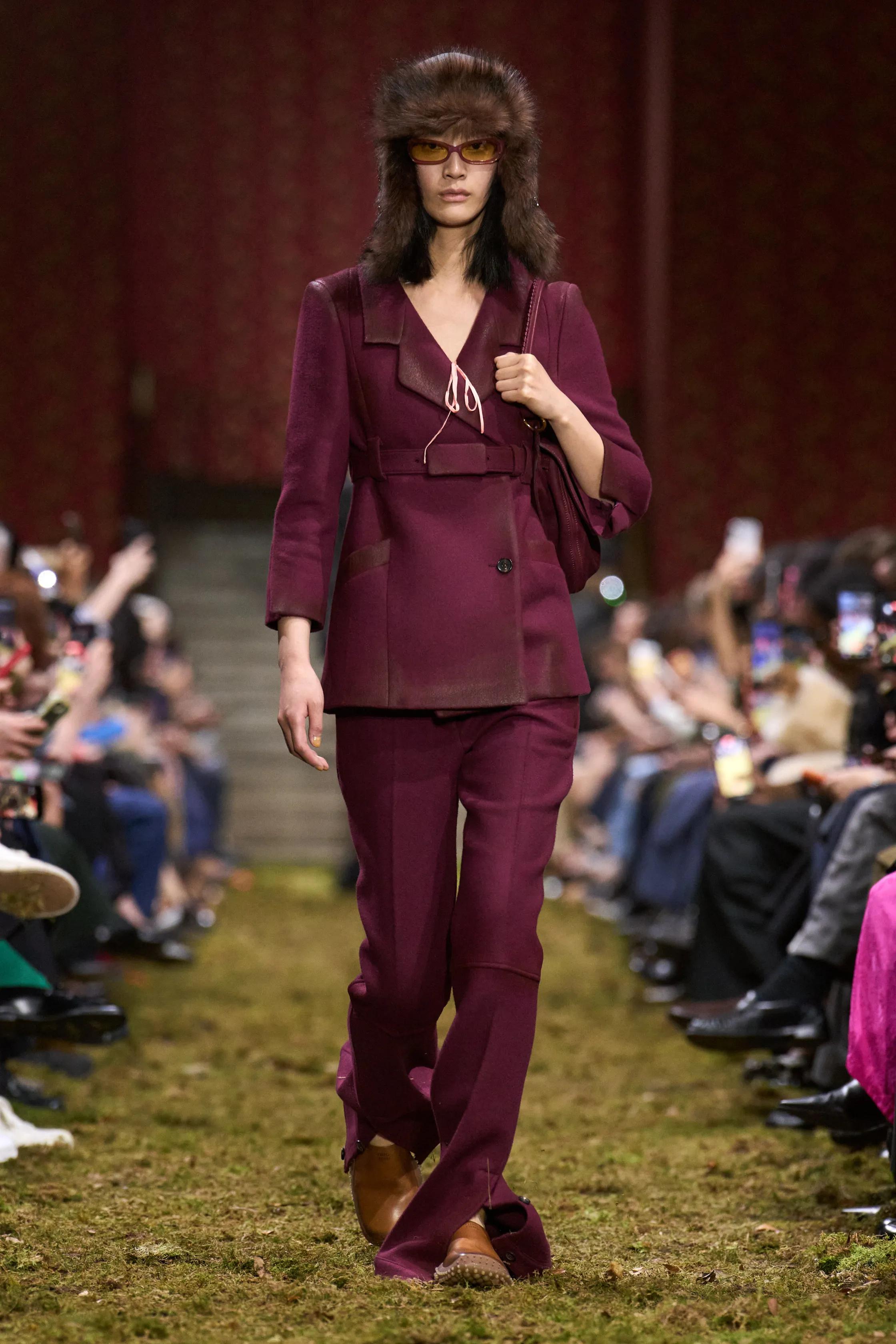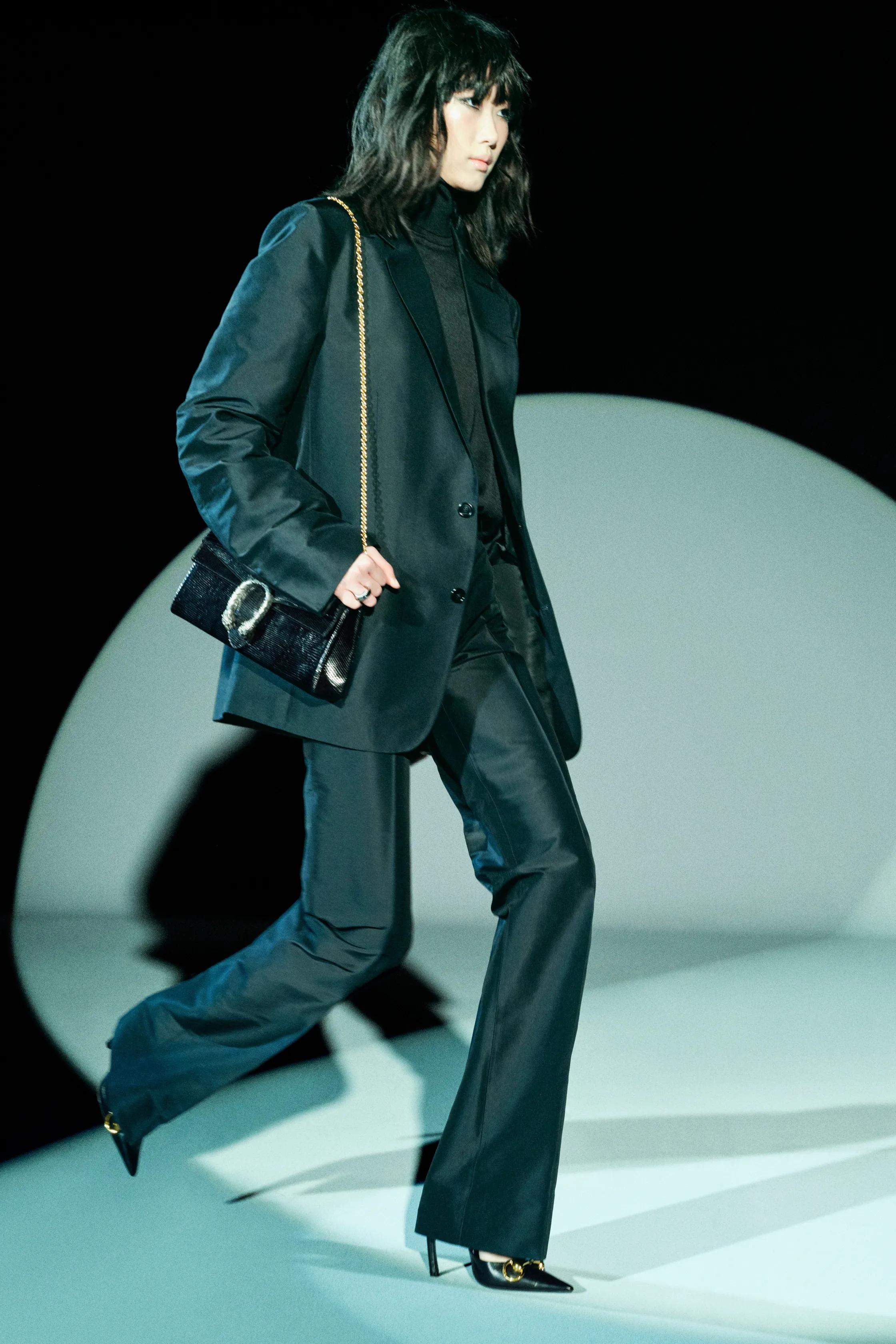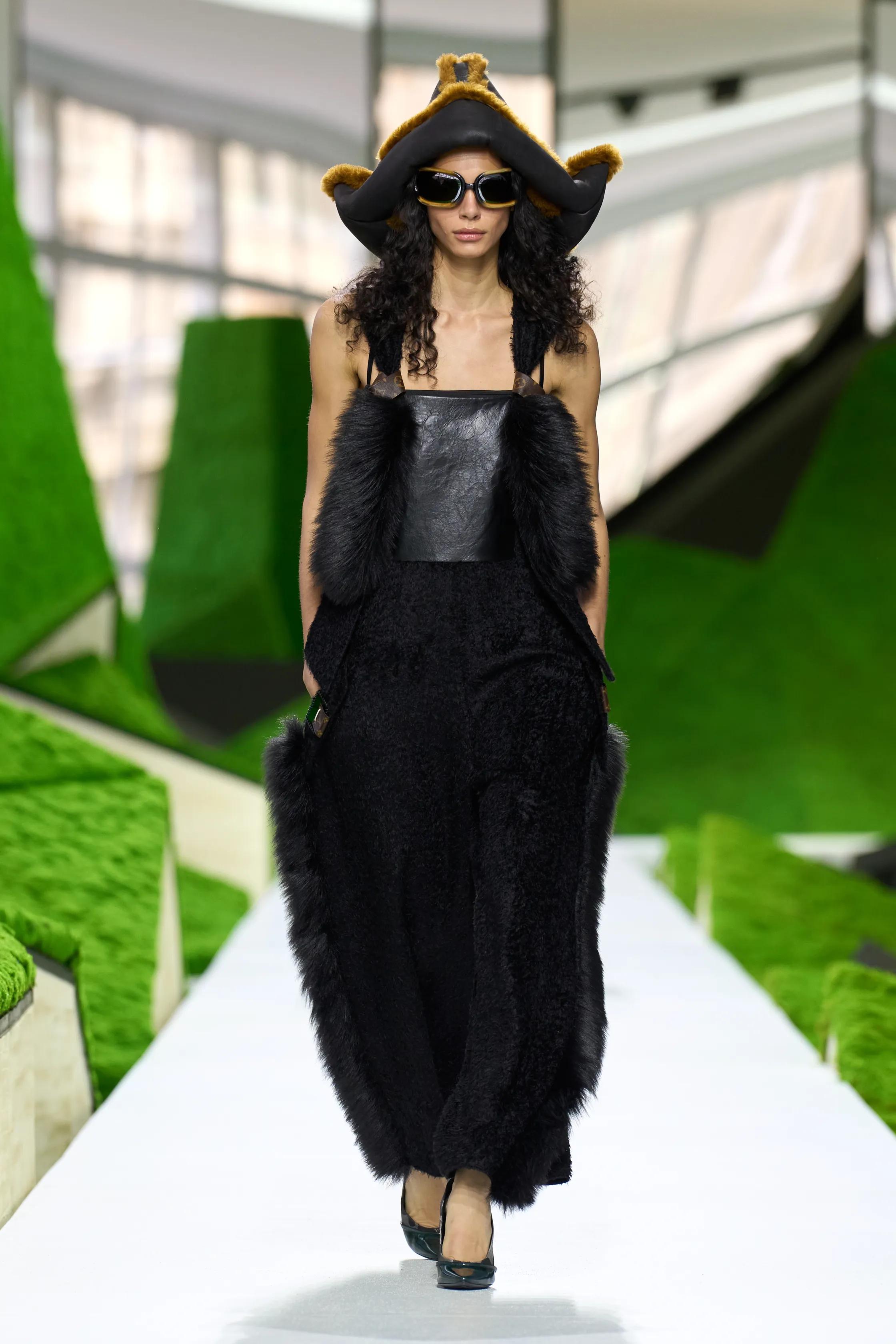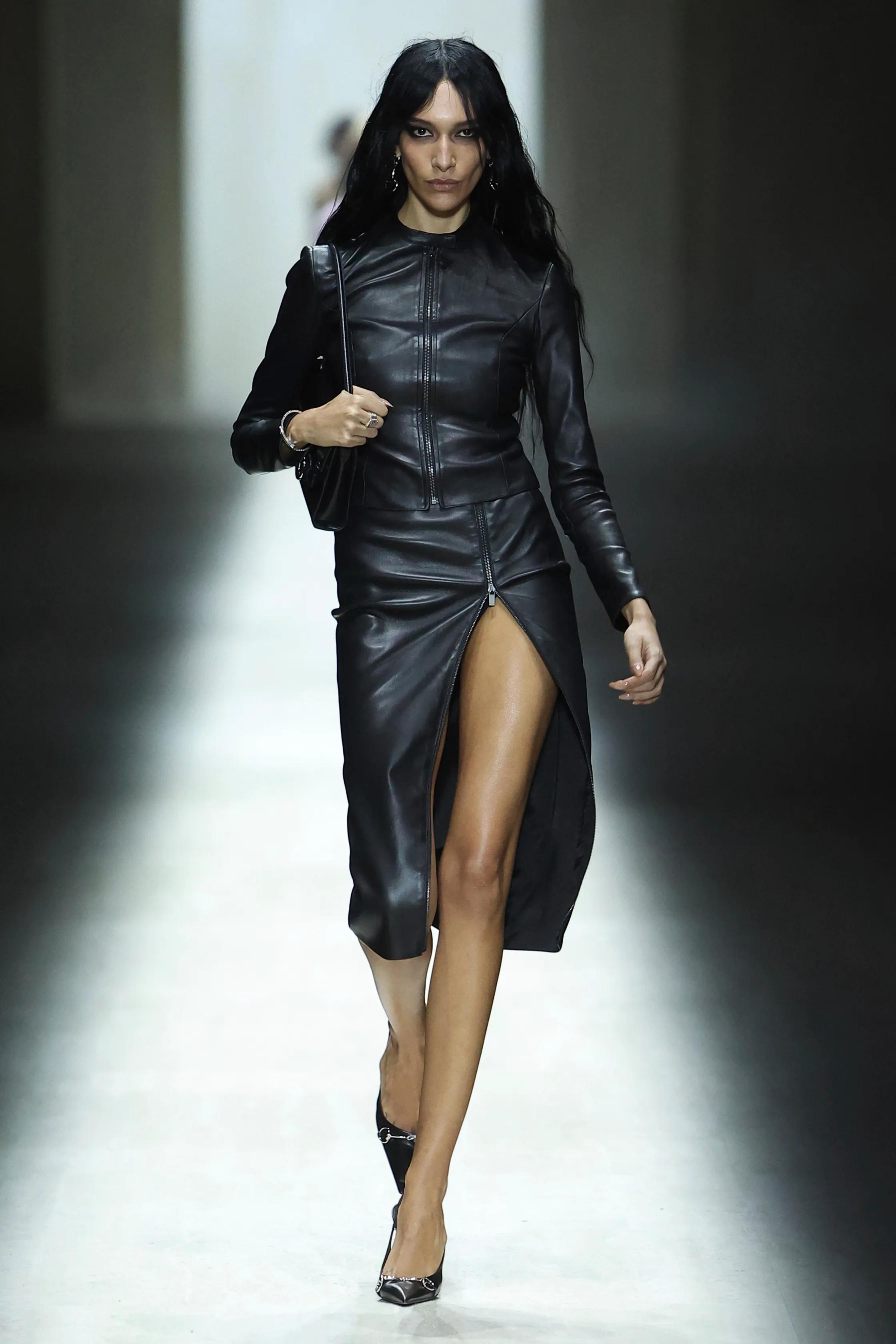
There's a moment every season when one material stops being a trend and becomes a thesis. For FW26, that material is leather.
Across 120 runway shows — Paris, Milan, London, New York, Copenhagen, Berlin, Tokyo — we ran Google Vision across 5,659 looks and tracked every label that came back. Leather was detected in 596 looks. Outerwear, the broader category leather dominates, appeared in 2,609. Coats in 1,893. Jackets in 823. When you add it up across the silhouettes leather actually lives in, this wasn't a trend. It was a consensus.
72 shows. 1,062 looks. One material.
The headline number is this: our runway scoring model counted leather as a meaningful signal in 1,062 looks across 72 of the 120 FW26 shows we indexed. That's 60% of the season's shows sending the same message. In a fashion landscape that spent the last two years fracturing into micro-aesthetics and subculture splinters, that kind of agreement is almost uncomfortable to look at.
To put it in context: the second most dominant outerwear material this season, shearling, appeared in roughly 799 looks — and Vision was tagging real fur alongside shearling, which means the actual shearling count is likely lower. Leather beat everything, cleanly.
What the search data says
Here's where it gets interesting. Leather outerwear as a composite trend scored 94.96 on our scoring model after social signals were applied — one of the highest scores of the season. But if you drill into the search data from pytrends, the picture is more nuanced.
Crocodile leather, one of the season's more directional leather sub-stories, is actually at 13.9 current search interest with a -52.8% velocity. Declining. The market is not following the runway there — at least not yet.
The leather story consumers are responding to is simpler: bombers and biker jackets. When Gucci showed a leather bomber in Milan, leather bomber searches spiked +200% within 24 hours. That's the version of leather FW26 that's breaking through — not the exotic, not the sculptural, but the familiar silhouette in the right material at the right moment.
Why now
Leather has a cyclical logic in fashion. It arrives when the mood wants edge — when softness has run its course and something harder needs to be said. FW26 follows three seasons of quiet luxury: the muted palette, the cashmere, the deliberate absence of provocation. Leather is the rebuttal.
But it's also worth noting what leather is not doing this season. It's not aggressive. The biker jacket showing at Gucci was styled with tailored trousers and kitten heels. The leather coats at Saint Laurent were clean and long. Even the more extreme leather pieces — the structured bodices, the head-to-toe looks — felt precise rather than confrontational. This is leather as authority, not leather as rebellion.
That distinction matters for forecasting. Authority dressing has commercial legs. Rebellion dressing is harder to sell in volume. The fact that FW26's leather moment is landing on the authority side of that divide is one reason the composite score is so high and why we'd expect the trend to have staying power into the retail cycle.
The silhouette breakdown
Our Vision data gives us three dominant leather silhouettes from FW26:
The leather biker jacket is the single strongest sub-item — high runway count, the search spike after Gucci confirmed consumer appetite, and the lowest barrier to entry for shoppers. It's the version of this trend that will be everywhere by October.
The leather coat — long, structured, often belted — is the aspirational piece. It appeared consistently across Paris shows in particular and represents the more editorial version of the trend. Search interest is steadier here, without the spike-and-fade pattern of the bomber.
The leather blazer sits between the two. It's tailoring's answer to the trend moment — the version that works inside the power suiting story as well as the outerwear story. Expect this to be the high street's interpretation.
The composite score
Leather Outerwear finished the FW26 season with a composite trend score of 94.96 out of 100 on runway.fyi's scoring model (50% runway presence, 30% search signal, 20% social/editorial coverage). That puts it in the top tier of everything we tracked this season.
The social score — fed by Google News coverage and Reddit fashion community signals — came in strong after the scoring fix we ran in late March. Editorial coverage of leather was consistent across the season, which is the signal that separates a trend that peaks at the shows from one that actually lands in wardrobes.
What this means
If you're shopping for FW26, leather outerwear is not a risk. It's the material the season agreed on, the silhouettes are versatile, the search data is confirming consumer interest, and the editorial coverage is sustaining the signal. The biker is the entry point. The long coat is the investment.
If you're watching the industry, the more interesting question is what leather's dominance displaces. Quiet luxury — the muted, the understated, the deliberately boring — scored 51.6 in search but with -38.4% velocity. It's declining. The cashmere-and-camel consensus is over. FW26 is the season fashion decided to have a point of view again, and it decided to make that point in leather.